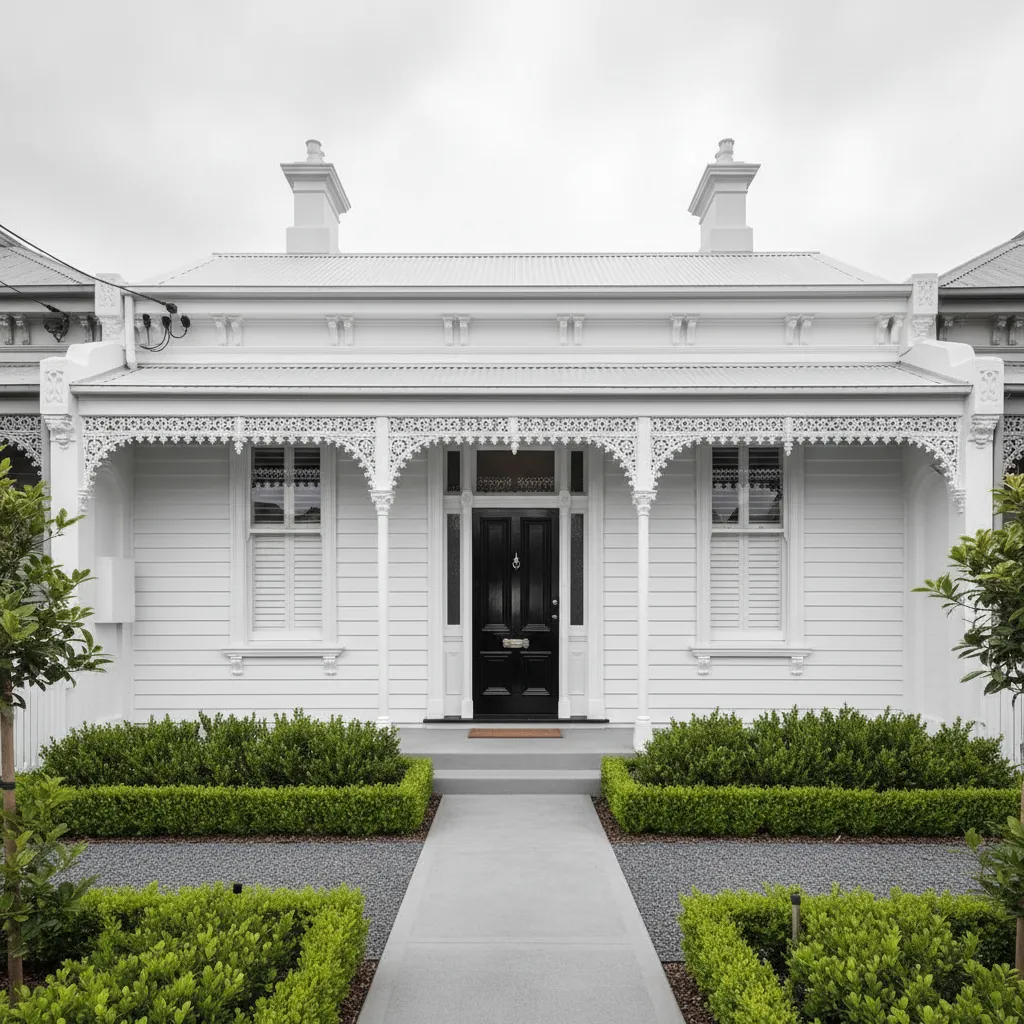
Doors are one of the most touched and noticed surfaces in any home. A freshly painted front door transforms street appeal instantly, while crisp interior doors make the whole house feel newer and more polished. Whether you are updating tired doors before a sale, changing colours to suit a renovation, or restoring heritage panel doors in an older Melbourne home, this guide covers everything you need to know — from the right paint and preparation technique to realistic costs and when it makes sense to call in a professional.
What Type of Paint Should You Use on Doors?
Doors cop more physical contact than almost any other painted surface in your home. They get opened, closed, bumped with elbows, nudged with feet, and wiped down constantly. That means you need a paint that is hard-wearing, easy to clean, and resistant to scuffing. The answer is enamel paint in a semi-gloss or gloss finish.
Enamel paints cure to a much harder film than standard wall paints (which are typically flat or low-sheen acrylics). The glossy surface makes them far easier to wipe clean — fingerprints, scuff marks, and grime come off with a damp cloth rather than requiring a full repaint. You have two main options:
- Water-based enamel (acrylic enamel): Low odour, fast drying, easy soap-and-water cleanup. Resists yellowing over time, which makes it ideal for white and light-coloured doors. Dulux Aquanamel is one of the most popular choices among Melbourne painters.
- Oil-based enamel (alkyd enamel): Cures to an extremely hard, durable shell. Produces a slightly smoother, more "glass-like" finish. However, it has a stronger odour, takes 16 to 24 hours between coats, requires mineral turps for cleanup, and tends to yellow on white surfaces over months and years.
For most Melbourne homeowners, water-based enamel is the better all-round choice. It delivers excellent durability without the fumes or yellowing. If your front door is exposed to direct weather — rain, sun, and temperature swings — make sure you use an exterior-grade enamel specifically formulated to resist UV degradation and moisture penetration. A standard interior enamel will chalk and peel within a year or two on a weather-exposed door. For more on choosing the right exterior paint, see our detailed guide.
What Is the Best Colour for a Front Door in Melbourne?
Your front door is the first thing visitors and potential buyers see. In Melbourne, bold statement colours are trending strongly — and for good reason. A striking front door creates a focal point that lifts the entire facade, even if the rest of the exterior is neutral. The most popular front door colours across Melbourne right now include:
- Navy blue: Classic, sophisticated, works beautifully against both light rendered facades and red brick.
- Deep green: Colours like Dulux Banksia Leaf or similar deep eucalyptus greens feel distinctly Australian and pair well with timber accents and garden greenery.
- Charcoal and dark grey: Modern, sleek, and versatile. A charcoal door on a white or light grey house looks sharp and contemporary.
- Classic red: Heritage homes and Victorian terraces in suburbs like Fitzroy, Carlton, and Richmond often suit a traditional red or burgundy.
The key principle is contrast. If your house facade is neutral — white render, cream brick, pale weatherboards — a bold door colour creates visual interest. If the facade is already busy with strong brick tones or multiple materials, a darker, more subdued door colour often works better. For heritage homes, research period-appropriate palettes to maintain the character of the property — our heritage house painting guide covers this in detail.
Colour Testing Tip
Before committing to a colour, paint a large piece of cardboard or MDF offcut with your chosen shade and hold it against the door frame at different times of day. Morning light, midday sun, and evening shade all change how a colour reads. A navy that looks perfect in the paint shop can appear almost black in a shaded porch. This five-minute test saves hours of repainting regret.
How Do You Prepare a Door for Painting?
Preparation is the difference between a door that looks professionally painted and one covered in drips, brush marks, and peeling edges. Skipping prep is the single most common reason DIY door painting goes wrong. Follow these steps for a flawless result:
-
Remove the door from its hinges and lay it flat on sawhorses This is the most important step. Painting a door flat eliminates drips and runs entirely. Gravity works with you instead of against you, and you can see the entire surface evenly. Use a screwdriver or drill to pop the hinge pins and lift the door off.
-
Remove all hardware — handles, hinges, locks, and latches Taping around hardware never gives a clean result. Removing everything takes ten minutes and gives you clean, crisp edges everywhere. Place all screws and hardware in a labelled zip-lock bag so nothing goes missing.
-
Clean the entire door with sugar soap Doors accumulate years of hand grease, cooking oils, and grime — especially around handles. Sugar soap cuts through these contaminants and gives the new paint a clean surface to bond to. Wipe down with a damp cloth after to remove any residue.
-
Sand the entire surface with 180-grit sandpaper Sanding creates a fine "tooth" that gives the new paint something to grip. You are not trying to remove the old paint — just roughen the surface enough so the new coat bonds mechanically. Sand in the direction of the grain on timber doors.
-
Fill any dents, scratches, or holes with wood filler Doors get bumped, dinged, and scratched over their lifetime. Apply a quality wood filler to any imperfections, let it dry completely, then sand flush with 180-grit paper. Enamel paint shows every flaw, so take the time to get the surface smooth.
-
Apply primer to any bare timber spots If your sanding or filling has exposed raw timber, those areas need a coat of primer before the topcoat. Bare wood is porous and will absorb the enamel unevenly, leaving dull patches. A quality primer seals the surface and ensures uniform colour coverage.
Should You Paint Doors With a Brush or Roller?
This is one of the most debated questions in DIY painting — and the answer is both. Each tool has a specific role when painting doors, and using the right one in the right place is the key to a smooth, professional-looking finish.
Use a mini foam roller (100mm to 150mm wide) on the flat panel areas of the door. Foam rollers lay down an incredibly even coat with no brush marks — just a smooth, consistent film of paint. They are fast, efficient, and give you a factory-like finish on large flat surfaces.
Use a quality angled brush (63mm is ideal — something like a Dulux Precision brush) for the edges, mouldings, recessed panel details, and any areas the roller cannot reach. The angled tip lets you cut into corners and grooves cleanly without leaving excess paint that drips or pools.
Professional Technique: Roll the Panels, Brush the Edges
Work the recessed panels and edges with the brush first, then immediately roll the flat areas while the brushed sections are still wet. This "wet edge" technique ensures everything blends seamlessly without visible lines where the brush and roller overlap. For the absolute smoothest finish — the kind you see on brand-new doors — professional painters use spray equipment. Spray painting eliminates all brush and roller texture entirely, leaving a true factory-smooth result.
How Many Coats Does a Door Need?
A properly painted door typically requires one coat of primer (on bare wood or when making a dramatic colour change) plus two coats of topcoat enamel at minimum. Here is why each layer matters:
- Primer coat: Seals porous surfaces, provides a uniform base, and improves adhesion of the topcoat. Essential on bare timber, new filler, or when switching from a dark colour to a light one.
- First topcoat: Builds colour depth and coverage. Even with primer, one coat of enamel rarely provides full, even opacity — especially with whites and light colours.
- Second topcoat: Delivers the final colour depth, uniform sheen, and the durability you need on a high-traffic surface like a door.
Between coats, allow proper drying time. For water-based enamel, wait 2 to 4 hours between coats. For oil-based enamel, allow 16 to 24 hours. Rushing recoat times traps solvents and causes the paint to wrinkle, bubble, or remain soft and sticky long after it should have cured. For a deeper look at how paint quality affects results, read our Dulux vs Haymes paint comparison.
For the best adhesion between coats, lightly sand the surface with 240-grit sandpaper after each coat has dried. This fine sanding removes any dust nibs or minor imperfections and gives the next coat a mechanical grip. Wipe off the dust with a tack cloth before applying the next coat.
How Long Does Door Paint Take to Cure?
There is a critical difference between paint being dry to touch and being fully cured — and misunderstanding this distinction is where most door painting problems begin. Here are the typical timelines for water-based enamel:
- Touch dry: 30 minutes to 1 hour. The surface feels dry when lightly touched, but it is still extremely soft and vulnerable to damage.
- Recoat ready: 2 to 4 hours. The paint is firm enough to accept another coat without lifting or wrinkling.
- Fully cured: 14 to 30 days. This is when the paint reaches its maximum hardness, durability, and resistance to scuffing and sticking.
During that 14 to 30 day curing window, your freshly painted doors are vulnerable. The most common problem is doors sticking to the frame — the soft enamel bonds to the painted frame when the door is closed, and when you open it, it tears the paint off in strips. This is frustrating, but entirely preventable.
Preventing Doors From Sticking During Curing
Do not close newly painted doors fully for the first week. Leave them slightly ajar — even just 5mm — so the painted surfaces do not press against the frame. If a door must be closed (for privacy or pet containment), apply a very thin dusting of talcum powder to the door edges and the frame where contact occurs. The talc acts as a release agent, preventing the soft paint from bonding to the frame surface while it cures.
Can You Paint a Door Without Removing It?
Yes, you can — but the results will not be as good. Painting a door while it is still hanging on its hinges means you are working on a vertical surface, which introduces several challenges that are difficult to overcome even with good technique.
Gravity pulls the wet paint downward, creating drips and runs — especially along the bottom edge where excess paint accumulates. Enamel paints are thicker than wall paints, so they are particularly prone to sagging on vertical surfaces. You also cannot easily paint the top edge, the bottom edge, or the hinge side without awkward contortions.
If you must paint a door in place, here are some practical tips:
- Use painter's tape on the hinges and surrounding frame to protect them from paint splatter.
- Work from top to bottom so any drips are caught and smoothed out as you work downward.
- Apply thinner coats than you would on a horizontal door — two thin coats are far better than one thick coat that runs.
- Check the bottom edge every few minutes during drying. This is where runs form, and you can brush them out if you catch them early.
- Slide a drop sheet or piece of cardboard under the door to catch drips.
For interior doors that will be seen every day, removing the door is worth the extra twenty minutes. For a back door or garage entry, painting in place may be an acceptable compromise.
How Much Does Door Painting Cost in Melbourne?
Door painting costs vary based on the door type, its condition, the number of coats needed, and whether it has detailed mouldings or heritage panel work. Here are typical Melbourne pricing ranges for professional door painting in 2026:
These prices typically include preparation, priming where needed, two coats of quality enamel, and reinstallation of hardware. The lower end of each range covers standard flush (flat) doors in good condition. The higher end covers heritage panel doors, doors requiring significant repair or stripping, or doors that need spray finishing for a premium result.
Painting doors as part of a larger project — such as a full interior painting job — often brings the per-door cost down significantly, as setup, travel, and preparation time are shared across the whole project. For a comprehensive breakdown of painting costs, see our full house painting cost guide.
How Modernize Solutions Paints Doors
At Modernize Solutions, we approach door painting with the same attention to detail we bring to every project across Melbourne. Our process is designed to deliver a factory-smooth finish that lasts for years — not months.
Every door is removed from its hinges and laid flat on purpose-built stands. This eliminates drips and runs entirely and allows us to work on both sides efficiently. All hardware — handles, hinges, locks, and latches — is removed, labelled, and reinstalled once the paint has cured. We never tape around hardware because tape never gives a truly clean edge.
For premium projects, we offer professional spray finishing — the same technique used in door manufacturing. Spray application delivers a perfectly uniform coat with zero brush or roller texture, giving your doors that brand-new, showroom look. For standard projects, our painters use the roll-and-brush technique with top-quality foam rollers and precision brushes.
We use Dulux Aquanamel as our standard door enamel — a water-based product that combines excellent durability with low odour and resistance to yellowing. For exterior front doors, we use exterior-grade enamels rated for Melbourne's UV levels and weather conditions.
Whether you need a single front door refreshed or every door in your home repainted, we provide a clear written quote with no hidden costs. Our residential painting service covers doors, frames, architraves, skirting boards, and every other surface in your home.