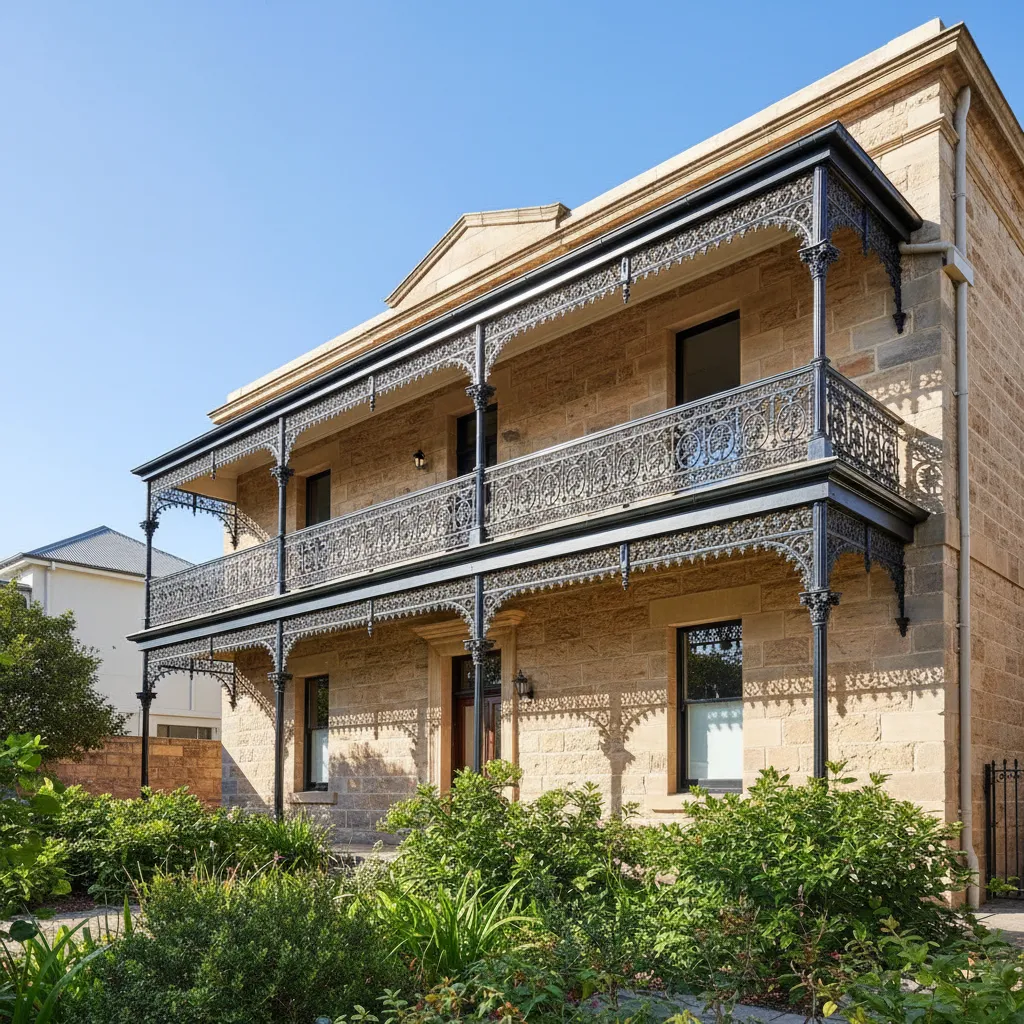
Melbourne has one of Australia's richest collections of Victorian, Edwardian, and Federation homes. Streets across the inner suburbs are lined with ornate facades, decorative lacework, and timber detailing that tell the story of the city's architectural history. But painting a heritage property is fundamentally different from painting a modern house. Heritage overlays, council regulations, period-appropriate colour palettes, lead paint hazards, and specialist preparation techniques all come into play — and getting any one of these wrong can mean fines, wasted money, or damage to irreplaceable features.
Do You Need a Permit to Paint a Heritage Home in Melbourne?
The short answer: if your property sits within a Heritage Overlay (HO), any change to the external colour scheme will almost certainly require a planning permit from your local council. This is one of the most common surprises for heritage homeowners — many assume that because they own the property, they can paint it whatever colour they choose. That is not the case when a Heritage Overlay applies.
The Heritage Overlay exists to protect the visual character of historically significant streetscapes. Councils use it to ensure that external alterations — including paint colours, materials, and sometimes even paint finish (gloss versus matte) — remain consistent with the period character of the area. Internal painting is almost always unrestricted, so you can do whatever you like inside.
The permit process typically takes four to eight weeks. Some councils have pre-approved heritage colour palettes that can speed things up considerably. If you select colours from an approved palette, the application is often straightforward. If you propose colours outside those palettes, expect a longer review process and potentially a heritage advisor's assessment.
Before You Pick Up a Brush
Always check whether a Heritage Overlay applies to your property before committing to any external colour scheme. Painting without the required permit can result in enforcement action, fines, and in some cases an order to repaint the property back to its original colours at your own expense.
What Is a Heritage Overlay and How Do You Check If Your Home Has One?
A Heritage Overlay (HO) is a planning control applied to individual properties, precincts, or entire streetscapes that have been assessed as having historical, architectural, or cultural significance. In Melbourne, thousands of properties across the inner and middle suburbs fall within Heritage Overlays — suburbs like Fitzroy, Carlton, South Melbourne, Essendon, Hawthorn, Williamstown, and Kew have particularly high concentrations.
Checking whether your property has a Heritage Overlay is straightforward. The quickest method is to use the VicPlan mapping tool, which is the Victorian Government's official online planning map. Simply enter your address, and the map will display all planning overlays that apply to your land, including any Heritage Overlay with its specific HO number. You can also contact your local council's planning department directly — they can confirm the overlay status and provide any associated heritage guidelines or approved colour palettes.
What the Heritage Overlay means for painting specifically is this: restrictions typically apply to external colours, external materials, and in some cases the type of paint finish used. For example, some heritage guidelines require low-sheen or flat finishes on wall surfaces to maintain a period-appropriate appearance, while allowing semi-gloss on trims and joinery. The level of restriction varies between councils and between individual HO schedules, so always check the specific requirements that apply to your property.
What Colours Are Appropriate for Victorian and Edwardian Homes?
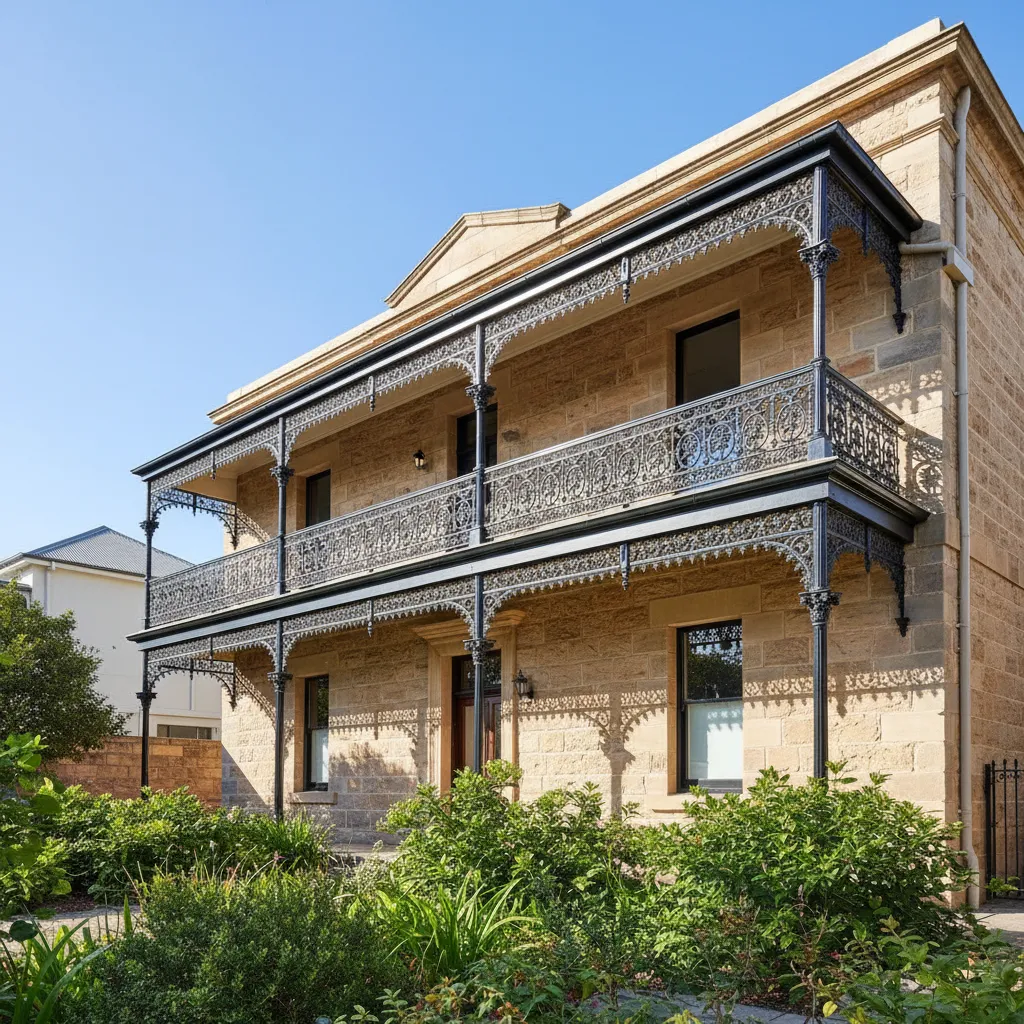
Period-appropriate colour selection is one of the most important aspects of heritage painting. The colours used on Victorian, Edwardian, and Federation homes were not arbitrary — they reflected the design philosophies, available pigments, and aesthetic movements of each era. Using the right palette does more than satisfy council requirements; it brings out the architectural detail and proportions that the original designers intended.
Victorian Era (1850s-1901)
Victorian homes favour deep, rich, and saturated colours. Think Brunswick Green, Indian Red, Venetian Red, deep ochre, dark cream, and chocolate brown. The hallmark of Victorian colour schemes is complexity — a well-painted Victorian facade typically uses three to five colours: a body colour, a lighter or contrasting trim colour, a detail colour for decorative elements, and often a separate colour for the window sashes. The goal is to highlight the ornate detailing that defines Victorian architecture.
Edwardian Era (1901-1918)
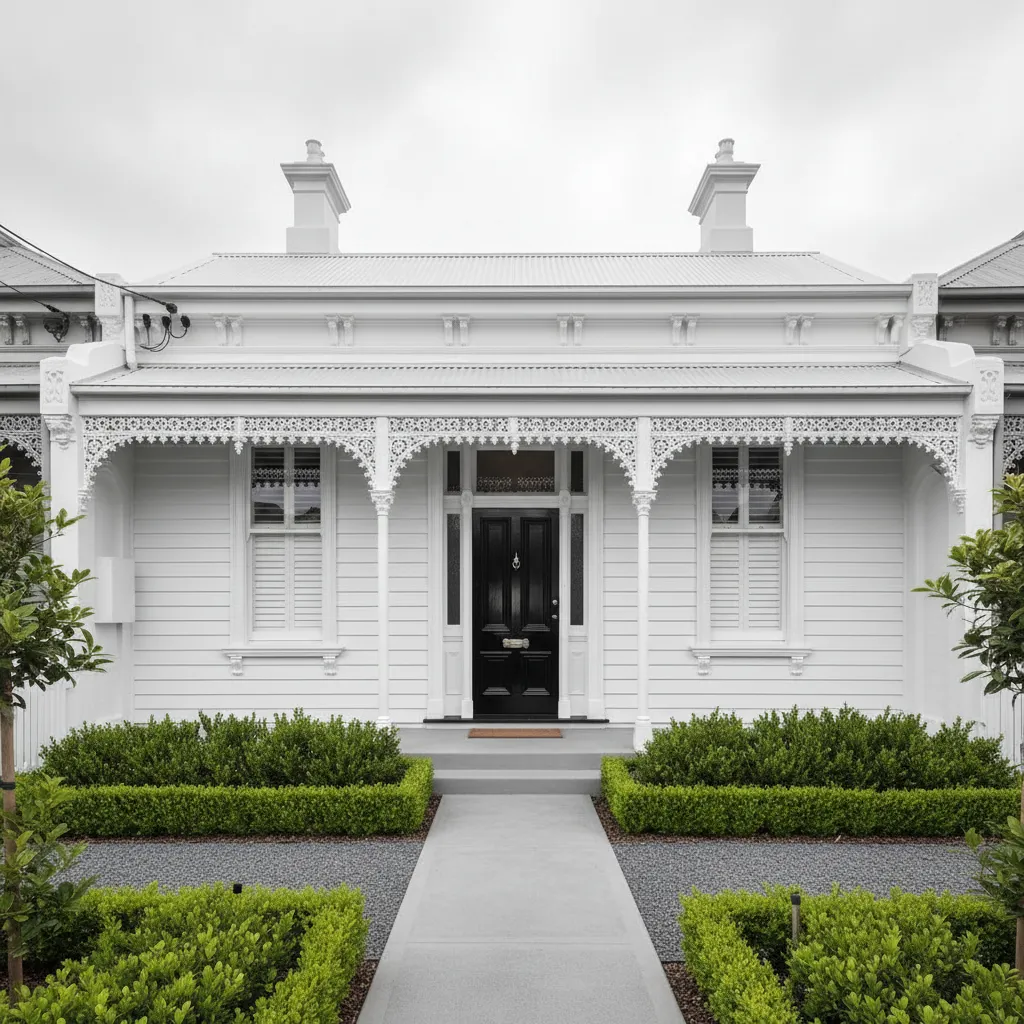
Edwardian homes shifted toward lighter, more restrained palettes. Soft greens, warm creams, off-whites, and muted sage tones became popular. The characteristic red brick of many Edwardian homes was typically left unpainted, with colour applied to timber elements — verandah posts, fascias, window frames, and eaves. Two to three colours is typical: a cream or white for the main timber elements, a contrasting trim, and a feature colour for the front door.
Federation Era (1890s-1915)
Federation homes blend elements of both periods, often with earthy, nature-inspired tones. Terracotta, olive green, deep red, and warm cream feature heavily. Federation colour schemes often draw on the Australian landscape — eucalyptus greens, sandstone yellows, and bush reds. Like Victorian schemes, Federation homes benefit from multi-colour approaches that pick out the architectural detailing.
Both the Dulux Heritage colour range and the Haymes Heritage collection offer historically researched palettes specifically designed for period homes. These are excellent starting points, and using colours from these ranges often satisfies council heritage requirements more readily than custom selections.
How Do You Handle Lead Paint on Heritage Properties?
Almost every home built before 1970 in Australia has lead paint somewhere on it, and many homes built before 1997 may also contain lead in some paint layers. For heritage homes — most of which date from the 1850s through to the 1920s — lead paint is virtually guaranteed to be present, often in multiple layers built up over decades of repainting.
Lead paint that is intact, stable, and not flaking is generally considered safe to live with. The danger arises during renovation and repainting, when sanding, scraping, and stripping create fine dust and particles that are extremely hazardous if inhaled or ingested. Children and pregnant women are particularly vulnerable. This is why heritage painting preparation requires specialist knowledge and strict safety protocols.
Before any preparation work begins, lead paint testing is essential. Professional testing can be done with XRF analysers (which give instant, non-destructive results) or through laboratory analysis of paint chip samples. DIY lead test kits like 3M LeadCheck swabs provide a quick initial indication, but professional testing is recommended for heritage homes where multiple paint layers are present.
EPA Victoria Requirements for Lead Paint
Under EPA Victoria regulations, lead paint removal must follow strict containment and disposal procedures. Dry sanding of lead paint is prohibited. All debris must be captured, contained, and disposed of as hazardous waste. Workers must use appropriate respiratory protection, and the site must be properly contained to prevent contamination of surrounding soil. On heritage properties with extensive lead paint, engaging a licensed lead paint removalist is strongly recommended.
If your heritage home has weatherboard cladding that needs repainting, lead paint management becomes even more critical because the extensive scraping and sanding required on weatherboards generates large volumes of dust that must be carefully controlled.
What Special Preparation Does Heritage Painting Require?
Heritage painting preparation is more involved, more time-consuming, and more skilled than standard residential painting. The overriding principle is preservation — the goal is to restore and protect original features, not replace them. This philosophy shapes every step of the preparation process.
-
Heritage assessment and colour consultation A thorough assessment of the property's condition, architectural style, and any Heritage Overlay requirements. This includes researching the original colour scheme where possible and selecting period-appropriate colours that will satisfy council guidelines.
-
Lead paint testing and safe removal Professional testing of all painted surfaces for lead content. Where lead is present, safe removal using wet-sanding, chemical strippers, or encapsulation methods — never dry sanding, heat guns on lead paint, or power tools without HEPA filtration.
-
Timber repair and restoration (not replacement) Damaged timber is repaired using epoxy fillers, timber splicing, or dutchman repairs rather than being replaced wholesale. Heritage guidelines typically require retention of original fabric wherever possible. Replacement timber must match the original profile exactly.
-
Specialist filling for ornate details Period mouldings, corbels, and decorative elements require careful filling with appropriate materials that match the hardness and texture of the original. Standard builders' bog is often too hard and can crack period-era softwood surrounds.
-
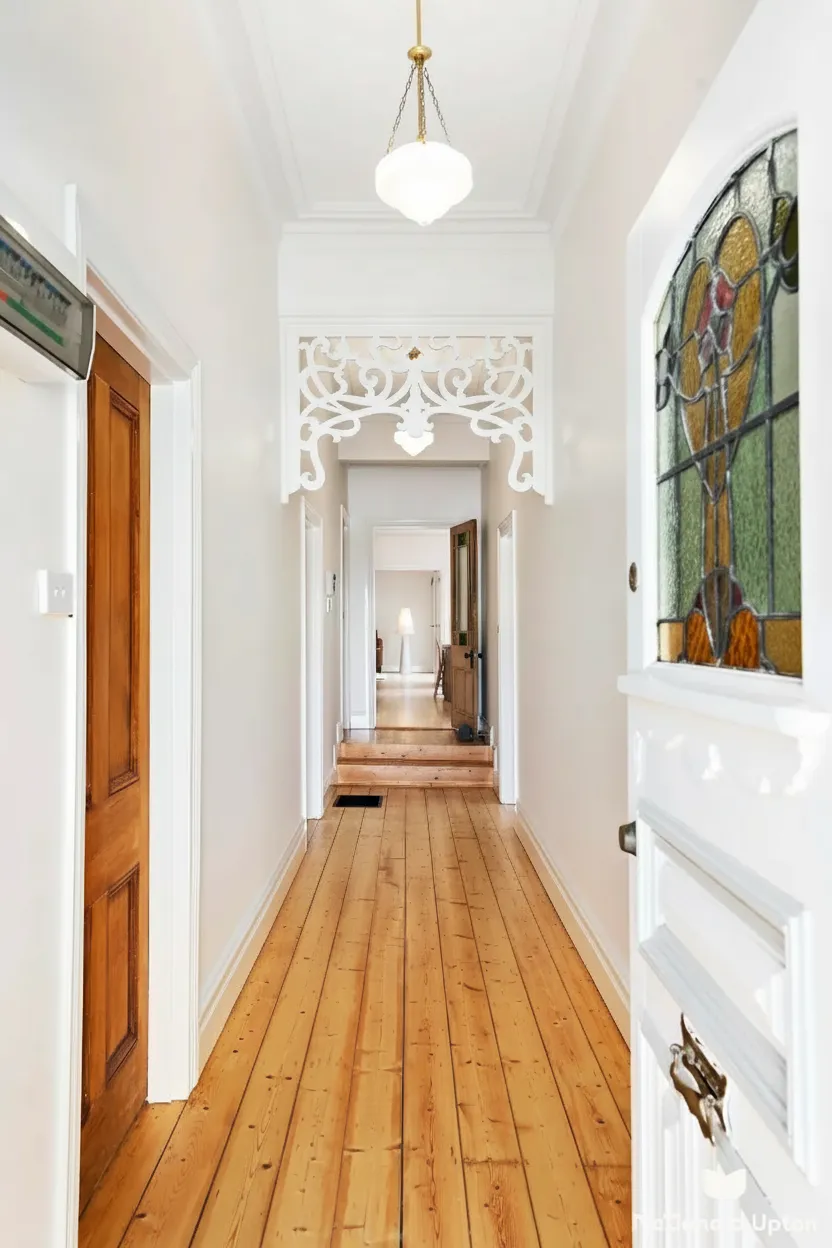
Hand preparation of decorative elements Ornate lacework, turned verandah posts, timber fretwork, and delicate mouldings must be prepared by hand. Power tools and aggressive sanding can destroy the crisp edges and fine detail that define heritage character. This is slow, painstaking work — and it is where much of the cost in heritage painting originates.
If paint failure like bubbling or blistering has occurred on your heritage home, the cause must be identified and resolved before repainting. On heritage properties, trapped moisture behind multiple paint layers is a common culprit, and simply painting over the problem will only make it worse.
Can You Paint Heritage Ironwork and Decorative Features?
Heritage homes often feature cast iron lacework, wrought iron balustrades, bullnose verandah roofing, timber fretwork, and ornate plaster details. Each of these materials requires a different approach to preparation and painting, and getting it wrong can cause rapid paint failure or even damage to the original elements.
Cast iron lacework is one of the most iconic features of Melbourne's Victorian homes. Before painting, all rust must be removed back to bright metal using wire brushes and rust converters — never sandblasting, which can warp and distort thin cast iron panels. A zinc-rich metal primer is essential to prevent rust from reforming under the new paint. Topcoats should be applied in thin, even layers to avoid filling in the fine detail of the casting.
Timber fretwork and turned posts require the same hand-preparation approach as other ornate timber elements. Spray application often delivers the best finish on complex shapes like turned verandah posts, where brush marks in thick paint can obscure the original profile. Back-brushing after spraying ensures adhesion in all the recesses and turned details.
Bullnose verandahs with their curved corrugated iron roofing need specialist attention. The curved sheets are prone to rust in the valleys where water pools, and the original galvanised coating may have degraded after a century of exposure. These surfaces require thorough rust treatment, an etch primer suitable for galvanised metal, and a flexible topcoat that can handle thermal expansion on hot Melbourne days.
How Much Does Heritage House Painting Cost in Melbourne?
Heritage painting costs more than standard exterior house painting — and there are legitimate reasons for the premium. The additional cost reflects the specialist skills, slower preparation methods, lead paint management, premium heritage paints, and the council permit process that standard residential jobs do not require.
The wide price range reflects the enormous variation between heritage properties. A single-fronted Edwardian cottage with minimal decorative detail sits at the lower end, while a double-fronted Victorian terrace with ornate lacework, a bullnose verandah, elaborate cornicing, and multiple decorative elements will sit at the upper end. The key cost drivers are:
- Council permit costs — Planning permit application fees, heritage advisor consultations, and the time involved in preparing and submitting a compliant application
- Specialist preparation — Hand preparation of ornate details, timber restoration, and the slower pace required to preserve original features
- Lead paint management — Testing, safe removal, containment, and hazardous waste disposal add significant cost on pre-1970s homes
- Multi-colour schemes — Heritage homes typically require three to five colours applied to different elements, compared to two colours on most modern homes
- Premium heritage paints — Products from the Dulux Heritage or Haymes Heritage ranges cost more than standard exterior paints
- Hand-painting detail work — Ornate elements that cannot be sprayed and must be painted by hand with fine brushes are labour-intensive
For a detailed breakdown of general house painting costs, see our complete guide to house painting costs in Melbourne. Heritage projects will typically sit at or above the upper end of those ranges.
How Modernize Solutions Approaches Heritage Painting
At Modernize Solutions, we understand that heritage homes are not just buildings — they are irreplaceable pieces of Melbourne's architectural history. Our approach to heritage painting is built on respect for original craftsmanship and a commitment to preservation-first methods.
We work closely with Melbourne councils on the permit process, helping homeowners navigate Heritage Overlay requirements and select period-appropriate colour schemes that satisfy both the guidelines and the homeowner's vision for their property. Our team has experience with Victorian terraces, Edwardian cottages, Federation bungalows, and heritage commercial buildings across Melbourne's inner and middle suburbs.
Every heritage project begins with a thorough assessment: the architectural style and period, the condition of all painted surfaces, lead paint testing, timber condition, and a review of any Heritage Overlay requirements specific to the property. From there, we develop a detailed scope of work that covers preparation, restoration, and the full painting specification — so there are no surprises once work begins.
We use the Dulux Heritage colour range as our primary palette for period homes, complemented by specialist primers and preparation products matched to the specific substrates on each property. Our residential painting service covers heritage homes of all sizes across Melbourne.
If your heritage home needs repainting — whether it is a full exterior restoration or targeted work on specific elements — get in touch for a free, detailed consultation and written quote. We will assess the work honestly and give you a clear picture of what is involved in achieving a result that honours your home's history and lasts for years to come.