A freshly painted fence can transform a Melbourne property’s street appeal and add years to the life of the timber or metal. Fence painting in Melbourne costs between $8 and $30 per linear metre depending on the fence material, height, condition, and the number of coats required. A typical residential fence repaint takes 1–3 days and, with quality preparation and paint, should last 5–10 years. This guide covers everything you need to know — from choosing the right paint system to understanding what a fair professional quote should include. Whether you’re comparing quotes from residential painting in Melbourne companies or planning a DIY attempt, this guide gives you the full picture.
Fence Painting Cost Melbourne: Quick Answer
Professional fence painting in Melbourne costs $8–$15 per linear metre for Colorbond and metal fences, and $15–$30 per linear metre for timber fences. A standard 30m timber fence costs $450–$900 to paint professionally. These prices include two coats of quality exterior paint and basic preparation.
Fence Painting Prices Melbourne by Fence Type
The type of fence is the single biggest driver of cost. Here are typical Melbourne 2026 rates by material:
| Fence Type | Cost per linear metre | Notes |
|---|---|---|
| Colorbond / metal | $8–$15/m | Clean, prime rust spots, 2 coats metal paint |
| Treated pine timber | $15–$22/m | Sand, prime, 2 coats exterior timber paint |
| Hardwood timber | $18–$28/m | Denser grain, slower paint absorption |
| Picket fence (detailed) | $25–$40/m | More labour for each picket individually |
| Rendered / masonry wall | $12–$20/m | Similar to exterior wall painting |
| Pool fencing (glass) | Not painted — excluded |
These are indicative Melbourne 2026 rates. Cost varies by fence height (standard 1.8m assumed in the above), surface condition, and site access. A fence in very poor condition — with significant paint failure, rot repairs needed, or very difficult access — will sit at the higher end of each range. Fences in good condition with straightforward access will be quoted closer to the lower end.
Timber vs Colorbond: Different Painting Requirements
Timber and metal fences are fundamentally different surfaces, and the painting process for each is distinct. Understanding these differences helps you evaluate quotes and have an informed conversation with fence painters in Melbourne.
Painting Timber Fences
Timber is a porous, living material that continues to absorb and release moisture throughout its life. This makes surface preparation especially critical. Raw or weathered timber must be sanded to remove loose fibres and provide a consistent, paintable surface. A penetrating primer is non-negotiable — it seeps into the wood grain and creates a stable anchor for topcoats. Without primer, the paint film sits on the surface rather than bonding to the timber, and it will peel within 2–3 years.
For vertical timber fencing, Dulux Weathershield or Dulux Wash & Wear Exterior are proven performers in Melbourne’s variable climate. Both products are flexible, UV-resistant, and formulated to withstand the temperature swings between Melbourne’s hot summers and cool winters. One important product warning: avoid applying 100% waterproofing membranes to timber fences. These products seal moisture inside the timber rather than allowing it to breathe, which leads to blistering and accelerated paint failure.
Painting Colorbond and Metal Fences
Colorbond is factory-coated at purchase, meaning a fresh installation does not require immediate painting. However, as the factory coating ages and fades — typically after 10–15 years of Melbourne sun — repainting extends the life of the fence considerably and restores the appearance. When repainting Colorbond or other metal fences, the critical step is treating any rust before applying topcoats.
Active rust must be treated with a rust converter or removed by sanding to bare metal before priming. Painting over untreated rust locks moisture against the metal and the rust continues to spread beneath the paint film — a problem that will be visible as bubbling and flaking within 12–18 months. Use Dulux Metalshield or an equivalent metal primer system, followed by a quality exterior enamel or metal topcoat. Self-etching primer is recommended for any sections sanded back to bare metal.
Picket Fences
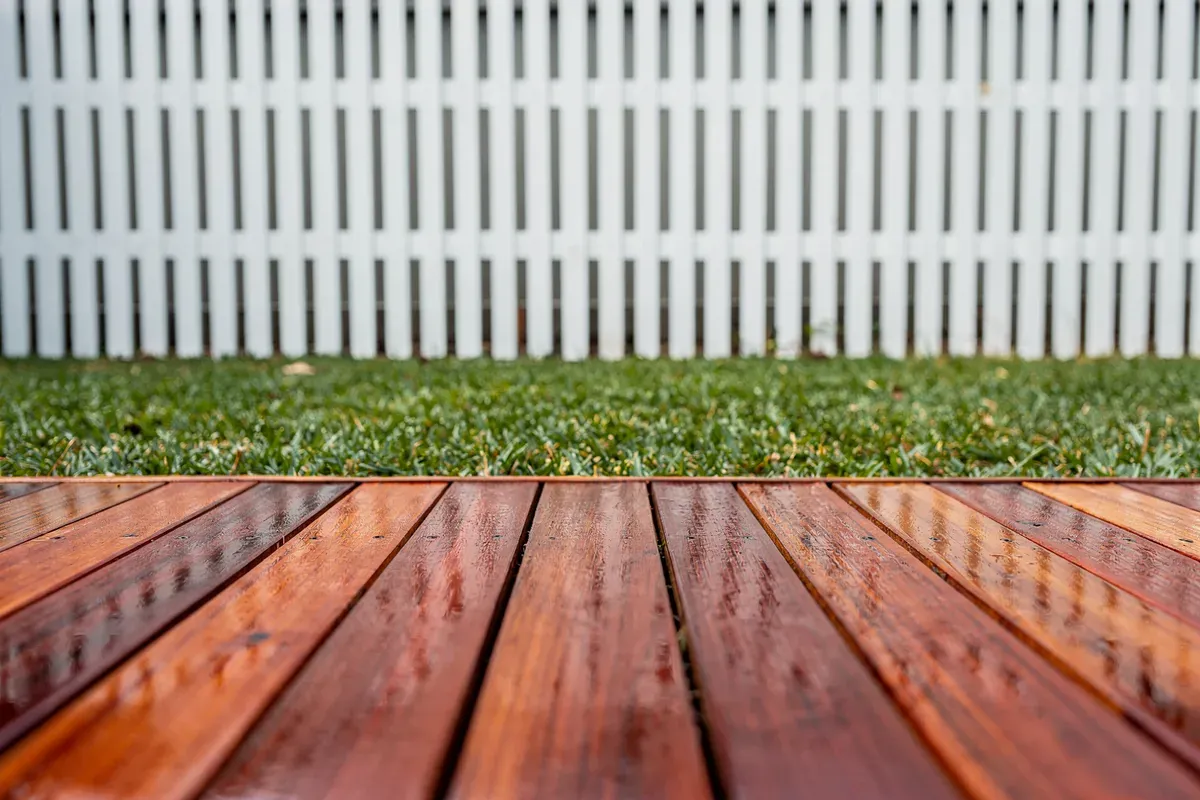
Picket fences are the most labour-intensive fence type to paint, and this is directly reflected in their price. Unlike a flat panel fence where a roller can cover large areas quickly, each individual picket on a picket fence must be coated on all sides — including the end grain, which is the most porous part of the timber and the first place moisture and paint failure appear. Allow 50–100% more labour time than a flat panel fence of equivalent linear length, and budget accordingly.
The Fence Painting Process
A professional fence painting job follows a consistent sequence of steps — the same principles of surface preparation that apply to interior and exterior painting apply equally to fences. Shortcuts at any stage compromise the durability of the final result. Here is what the process should look like on a quality job:
- Clear vegetation — Trim back overhanging plants, vines, and garden beds that prevent access to both sides of the fence. Painting over or around vegetation produces uneven coverage and accelerates moisture damage.
- Clean the surface — High-pressure wash to remove accumulated dirt, mould, mildew, and loose paint. Painting over contaminated surfaces is one of the most common causes of premature paint failure.
- Repair damage — Replace broken or rotted palings, treat rust on metal sections, fill cracks in rendered masonry sections. Painting over structural damage does not fix it — it hides it temporarily while the problem worsens underneath.
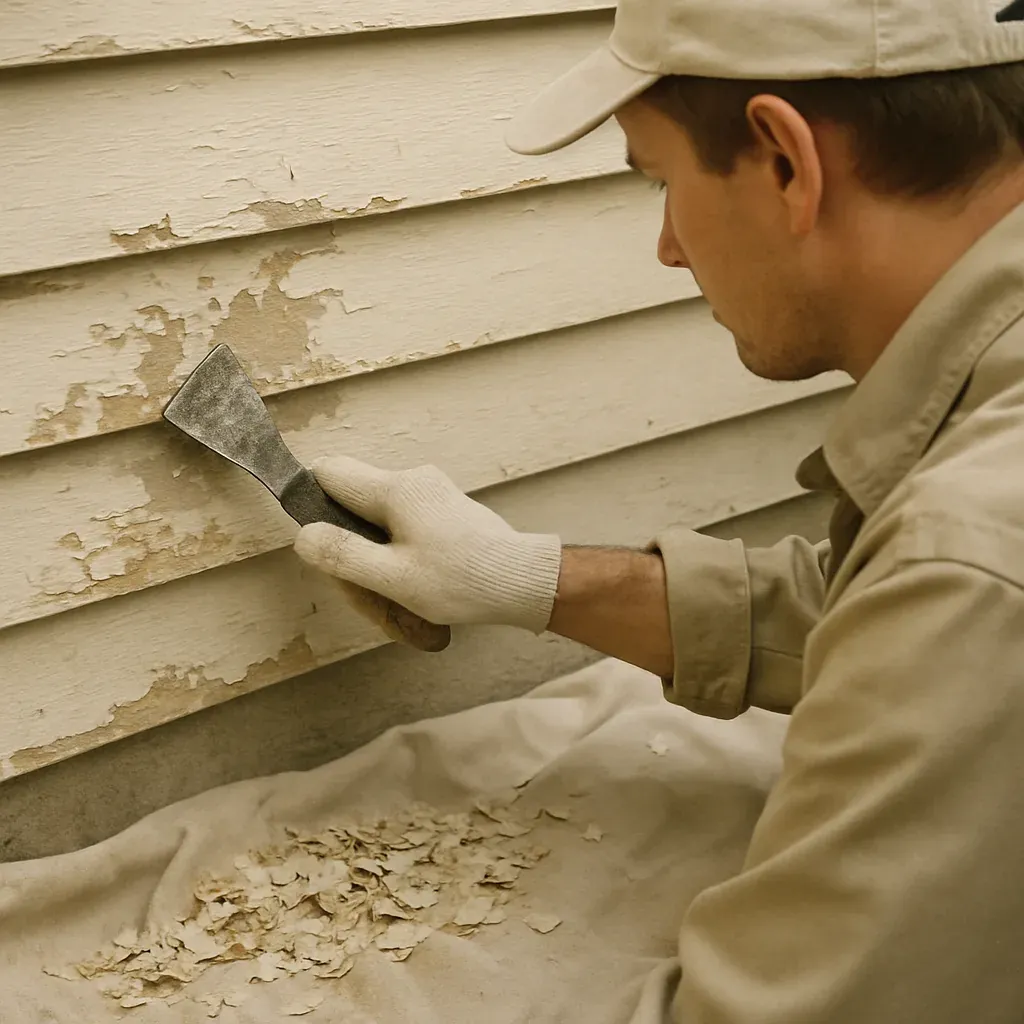
- Sand and prep — Light sand on timber to remove loose fibres and create surface texture for primer adhesion. Sand rust spots on metal fences back to bare metal where necessary.
- Prime — Apply an appropriate primer to all bare timber or bare metal sections. This is the single most important step for longevity — primer provides the adhesion base that everything above it depends on.
- Two topcoats — Apply quality exterior paint in two full coats, allowing adequate drying time between coats. Two coats are required for full, durable coverage — one coat is never sufficient on an exterior fence exposed to Melbourne’s weather.
Key Takeaway
The single biggest mistake in DIY fence painting is skipping the primer on bare or previously unpainted timber. Without a penetrating primer, topcoats will absorb unevenly into the porous timber and peel within 2 years — often sooner on north-facing fences that receive direct sun.
Best Paint for Fences in Melbourne
Choosing the right paint product for your fence type makes a significant difference to how long the finish lasts. Here is what works best for each surface type in Melbourne’s climate:
Timber Fences
Dulux Weathershield Low Sheen Exterior is a go-to product for Melbourne timber fences. It is flexible enough to accommodate the natural expansion and contraction of timber across seasonal temperature swings, resistant to UV degradation from Melbourne’s harsh summer sun, and contains mould-inhibiting agents that protect shaded fence sections where moisture lingers. For a durable, long-lasting result on timber, this product system — penetrating primer followed by two coats of Dulux Weathershield — is among the best available in Australia.
Colorbond and Metal Fences
Dulux Metalshield primer followed by an exterior enamel topcoat is the standard professional system for metal fences. For sections sanded back to bare metal, use a self-etching primer that chemically bonds to the metal surface for superior adhesion. Never apply topcoat directly to bare or rusted metal — the results will be short-lived.
Colour Considerations
Dark colours on north-facing timber fences absorb significantly more heat than lighter colours. This increased thermal loading causes the timber to expand and contract more aggressively through the day and across seasons, which places greater stress on the paint film. If your fence faces north and receives full sun throughout the day, lighter colours or specifically hardwearing paint systems designed for high-movement substrates will extend the life of your paint job. Earthy neutrals and mid-tones are a practical compromise between aesthetic appeal and durability in these conditions.
Finish Type
Exterior fences should generally be finished in low sheen or satin rather than matte. Low sheen and satin finishes are easier to clean — essential for front fences that collect street grime — and are more durable than matte finishes when exposed to the elements. Matte finishes are porous and tend to retain moisture and mould growth on fence surfaces, whereas low sheen provides a mild barrier while maintaining a natural appearance.
DIY Fence Painting vs Hiring a Professional
Fence painting is one of the more accessible exterior painting tasks for a competent DIYer — but it is not without risks. Here is an honest comparison to help you decide.
DIY Fence Painting
DIY fence painting is feasible for small, straightforward fences in reasonable condition. A 10–15m treated pine paling fence that needs a refresh coat — where the existing paint is still intact and only lightly weathered — is a realistic DIY project for a methodical homeowner with a weekend and the right materials. The main risks are uneven coverage from incorrect technique, skipped preparation steps that cause premature failure, and the wrong paint product being chosen for the fence type or climate.
Realistically, a DIY fence paint result on a timber fence will typically last 3–4 years before noticeable fading and peeling begins, compared to 7–10 years for a professionally prepared and painted result. Over a 10-year period, the cost difference between two professional paint jobs and four DIY repaints often makes professional painting the better value.
When to Hire Professional Fence Painters in Melbourne
A professional result is worth the investment in the following situations:
- Timber fences over 20m — the volume of prep work is significant and the risk of skipping steps increases with scale
- Fences painted over multiple previous colours — existing paint compatibility becomes complex
- Severely weathered or damaged timber — correct assessment and repair before painting requires experience
- Picket fences — the labour for proper coverage on all picket faces makes professional spray application highly cost-effective
- When you want a result that lasts 7–10 years rather than requiring repainting within 3–4 years
The decision ultimately comes down to your confidence in the preparation process. Anyone can apply paint — the preparation is where professional experience pays for itself.
Why Modernize Solutions for Fence Painting Melbourne
Modernize Solutions is one of Melbourne’s most trusted fence painting services, with 30+ years of residential painting experience and 1,000+ completed projects. We use Dulux premium exterior paint systems, provide fixed-price quotes, and carry $20M public liability insurance. Our team is Rated 4.8 stars on Google (154 reviews). Whether you have a 10m Colorbond side fence or a 60m painted timber front fence, we assess the condition, recommend the right product, and deliver results that last. As part of every job we assess your exterior painting needs holistically — fence, fascias, weatherboards and all. Call 0451 040 396 for a free fence painting quote.
How Long Does Fence Painting Take?
Duration depends on the length of the fence, the fence type, and the level of preparation required. Here are typical Melbourne professional timelines:
Half day – 1 day
Small fence (up to 20m)
1–2 days
Medium fence (20–50m)
2–3 days
Large property fence (50m+)
Double the time
Picket fences vs panel fences
Drying time: most quality exterior paints are touch-dry in 1–2 hours and can be recoated in 4 hours. However, full cure takes 7–14 days — during which the paint film is still hardening and should not be subjected to pressure washing or heavy contact.
Weather is also a factor. Melbourne’s unpredictable spring weather can add delays — professional fence painters will not apply paint in direct rain or when temperatures fall below 10°C, both of which compromise adhesion and film formation.
Frequently Asked Questions
How much does it cost to paint a fence in Melbourne? : Professional fence painting in Melbourne costs $8–$15 per linear metre for Colorbond and metal fences, and $15–$30 per linear metre for timber fences. A standard 30m timber fence costs $450–$900 to paint professionally, including two coats of quality exterior paint and basic preparation. Picket fences and highly detailed fence styles sit at the higher end due to the additional labour involved.
Do I need to prime before painting a fence? : Yes — bare or previously unpainted timber fences must be primed before topcoats are applied. Without a penetrating primer, topcoats absorb unevenly into the porous timber surface and will peel within 2 years. Metal and Colorbond fences require a metal primer on any rust spots or bare metal areas before applying topcoat. Never skip the priming step; it is the foundation that determines how long the entire paint system lasts.
How long does fence paint last in Melbourne? : With proper preparation, priming, and two coats of quality exterior paint, fence painting in Melbourne should last 5–10 years. Products like Dulux Weathershield are specifically formulated for Melbourne’s UV levels and variable climate. DIY results without correct preparation typically last 3–4 years before noticeable fading and peeling begin. North-facing fences in full sun will generally require repainting sooner than south-facing or shaded fences.
Can you paint a Colorbond fence? : Yes, Colorbond fences can be repainted. Colorbond is factory coated at purchase, but after 10–15 years the original coating fades and can be refreshed with a new paint system. The key requirement is treating any rust spots before painting — use a rust converter or sand back to bare metal, then prime with Dulux Metalshield or equivalent metal primer before applying topcoat. Never paint over active rust; it will continue to spread beneath the paint film.
Should I paint both sides of a fence? : Ideally yes, especially for timber fences. Painting only one side leaves the reverse side exposed to moisture absorption, which causes the timber to swell and dry unevenly. This uneven moisture movement leads to warping, cupping, and accelerated paint failure on the painted side — even though the painted side itself was not directly exposed to water. If access to both sides is genuinely limited, at minimum treat all end grain and exposed edges with a penetrating primer to reduce moisture uptake from the most vulnerable areas.

Modernize Solutions
Melbourne's most experienced residential painters since 1987.